


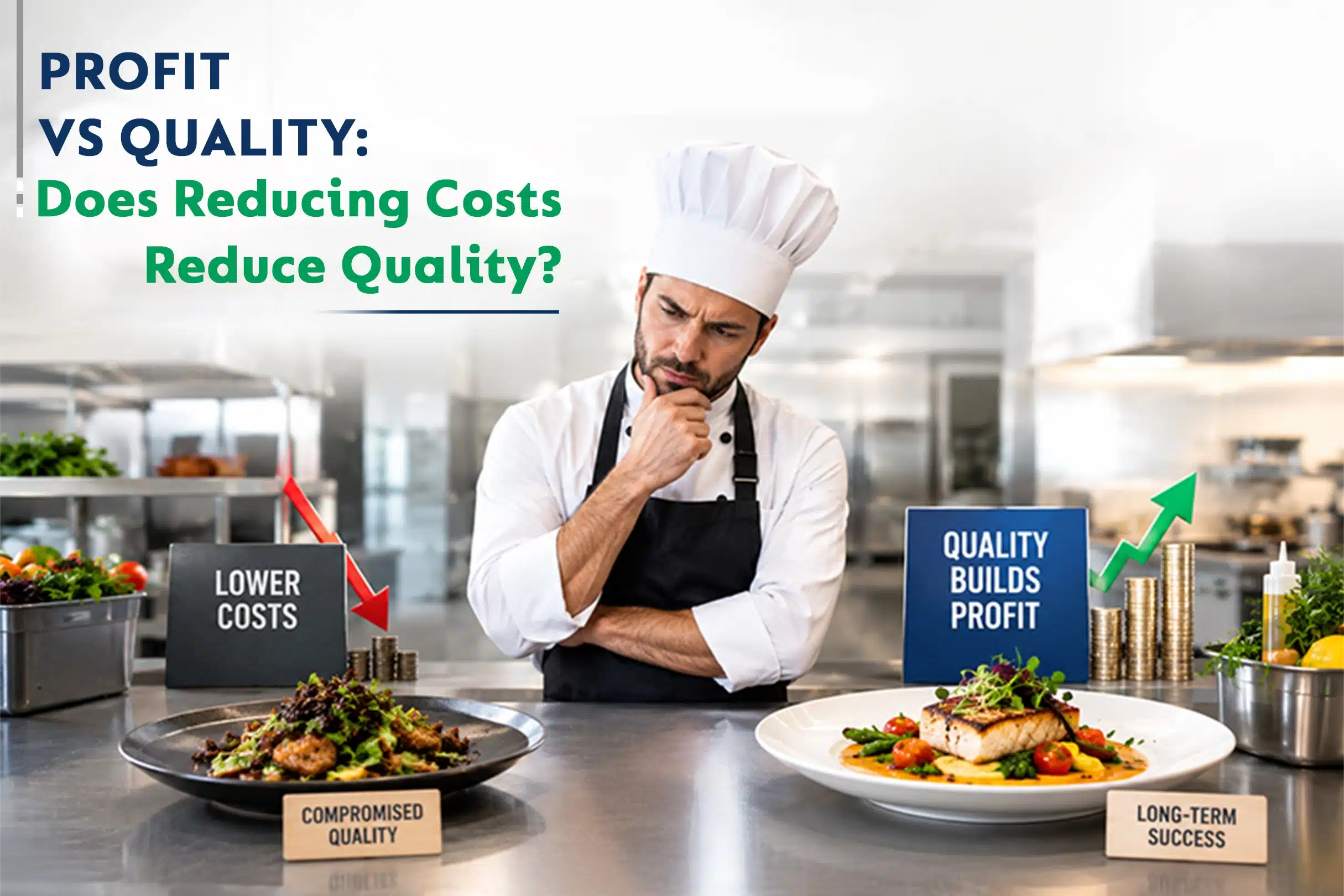
One of the questions I hear most often when working with organisations is this: “If we cut costs, won’t our quality suffer?”
It’s an understandable fear. We’ve all seen businesses slash budgets in ways that leave employees exhausted, customers frustrated, and reputations bruised. But I’ve also seen something very different: organisations that reduce costs and improve quality at the same time. The difference lies not in the size of the cuts, but in the thinking behind them.
When Cost Cutting Damages Quality
Let’s start with the obvious truth: if you cut into the muscle of your organisation, you will feel it.
When businesses reduce spending by downgrading materials, removing skilled people, shrinking training budgets, or weakening quality control, the consequences are predictable. Products become less reliable. Services become inconsistent. Customers notice, and they rarely forgive.
This is particularly important for businesses investing in commercial catering equipment, where product reliability, durability, and performance can directly influence daily operations. Choosing cheaper kitchen cooking equipment simply to reduce initial costs may create higher maintenance expenses and operational problems in the long run.
I’ve watched teams struggle under the weight of “efficiency drives” that were really just disguised resource reductions. The short-term savings look good on a spreadsheet, but the long-term impact can be far more expensive. Lost trust, lost customers, lost capability. Once those things slip, they’re hard to rebuild.
When Cost Reduction Strengthens Quality
But here’s the part we don’t talk about enough: cost reduction doesn’t have to mean compromise. In fact, some of the most successful organisations I’ve worked with have achieved better quality precisely because they focused on reducing waste, not value.
Lean thinking is a perfect example. When teams redesign workflows, shorten setup times, remove bottlenecks, and eliminate unnecessary inventory, they often discover they can deliver faster, more consistently, and with fewer errors. Quality improves because the system improves.
For businesses using cooking equipment, baking equipments, and other professional kitchen solutions, improving workflow can make a significant difference. The right equipment, combined with efficient processes, can help teams reduce unnecessary downtime, improve productivity, and maintain consistent output without compromising quality.
Continuous improvement works the same way. When people are encouraged to spot problems early, prevent defects, and refine processes, the organisation saves money, not by cutting corners, but by doing things better.
This is the kind of cost reduction that energises rather than drains. It invites people to think, to innovate, and to take ownership. And it creates a culture where quality is protected, not sacrificed.
Real-World Lessons
I’ve seen manufacturing teams reclaim hours of productive time simply by reducing setup complexity. I’ve seen service organisations transform customer experience by redesigning workflows that were quietly wasting time and energy. I’ve seen quality management systems save companies millions by preventing defects before they ever reached a customer.
The same principle applies when selecting catering equipment suppliers. The lowest purchase price should not always be the only consideration. Factors such as equipment quality, durability, after-sales support, maintenance requirements, and long-term operating costs can have a much greater impact on overall value.
These successes all share one principle: they cut waste, not value.
When leaders focus solely on spending less, they almost always risk damaging quality. But when they focus on working smarter through technology, process improvement, efficient catering equipment, and genuine employee involvement, they can create sustainable savings and stronger performance.
The Real Question Leaders Should Ask
The question isn’t “Should we reduce costs?” The question is “How will we reduce costs?”
If the answer involves removing essential capability, quality will fall. If the answer involves improving how the organisation works, quality can rise.
The best leaders I know don’t treat cost and quality as opposing forces. They treat them as partners. They understand that long-term competitiveness comes from balancing efficiency with customer value — not trading one for the other.
Whether an organisation is investing in commercial catering equipment, upgrading kitchen cooking equipment, or reviewing its existing cooking equipment, the focus should always remain on long-term value rather than simply choosing the cheapest option.
Final Thought
Cost reduction is not the enemy of quality. Poor decision-making is.
When we cut with care, clarity, and curiosity, we create organisations that are not only leaner, but stronger. And that’s where real, sustainable profitability lives.